07 July 2026
Connection to place. Connection to people.
From the magnificent Māori artworks that adorn our building, to the moving and meaningful cultural experiences we offer, New Zealand International Convention Centre (NZICC) invites all of our guests to engage with the culture of Tāmaki Makaurau Auckland and experience true manaakitanga (hospitality) in a way that resonates long after an event.
Underpinning every element of our cultural offering is our foundational partnership with Ngāti Whātua Ōrakei, the tangata whenua (people of the land) of central Auckland – the land on which NZICC stands. This relationship and our wider commitment to te ao Māori (the Māori worldview) can be felt at every level, from the building design itself to the ways in which it is woven into our operations and the experiences we extend to clients and guests.
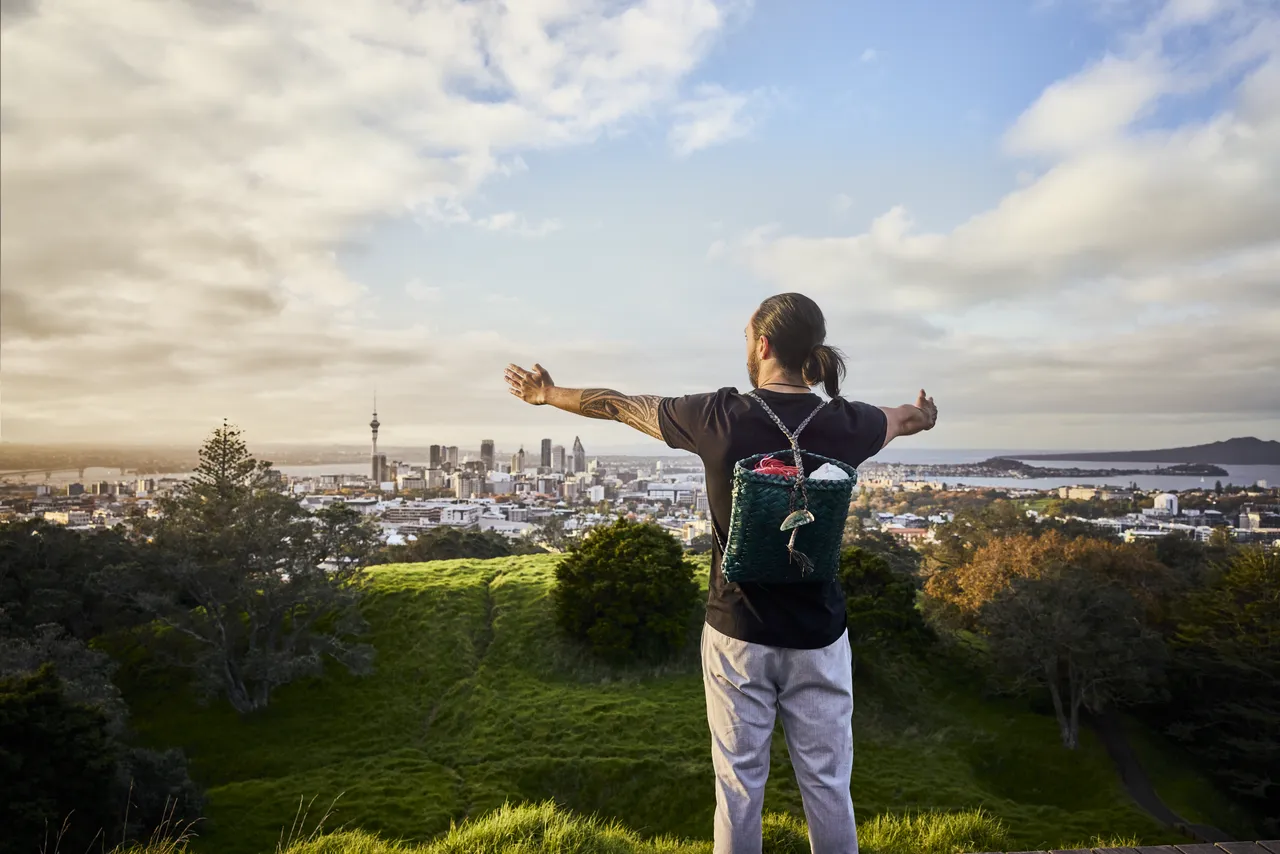
It was Ngāti Whātua Ōrakei who gifted NZICC its Māori name, Te Tumu. A name befitting of our landmark venue, Te Tumu translates literally to ‘tree stump’, and symbolises NZICC’s enduring nature as a strong and sturdy base from which growth and connection can flourish.
Our Pou Tikanga, Te Raukura Hawke
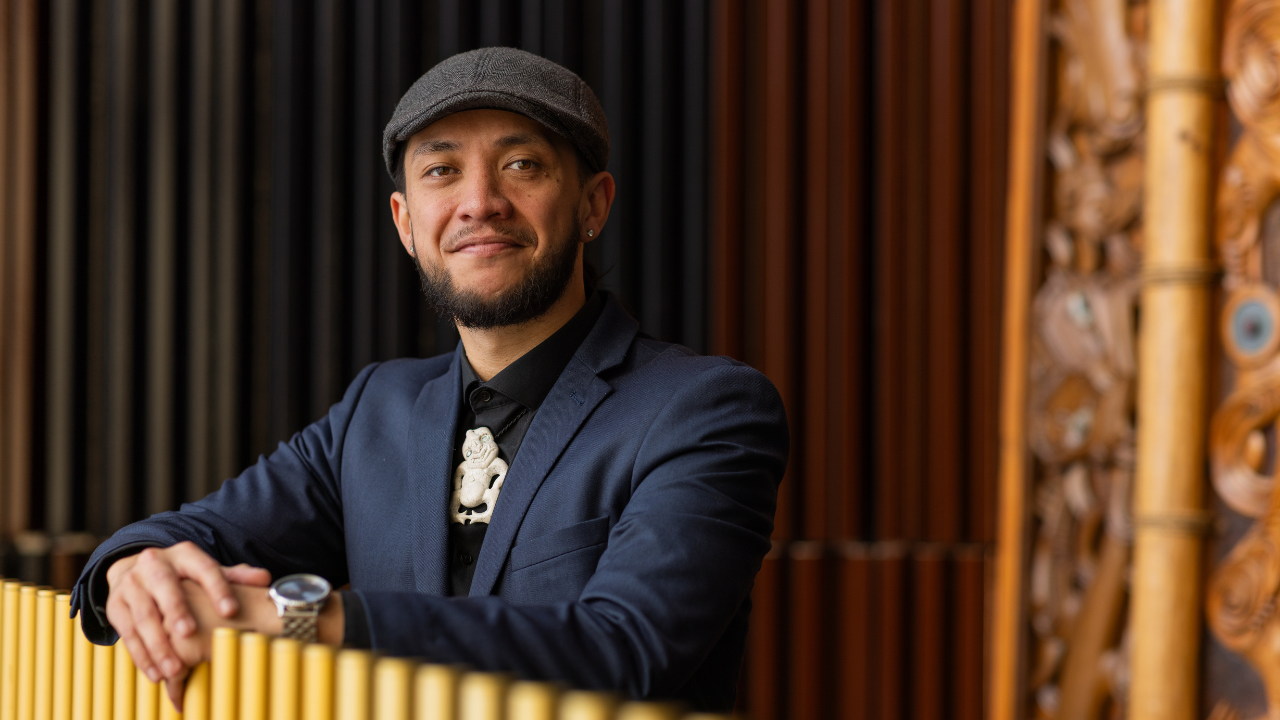
Also, from Ngāti Whātua Ōrakei comes Te Raukura Hawke (Tee), our Pou Tikanga or Māori Cultural Advisor. Tee was raised on the marae speaking te reo Māori (Māori language) exclusively through his early years, so naturally, brings deep knowledge and understanding of tradition and protocol. He explains his title, Pou Tikanga, this way: “Tikanga is derived from the word ‘tika’, which means to be proper and correct. So tikanga really just means doing things the right or proper way. My job is to make sure all our actions are in harmony with people, place and purpose.”
It’s a role he is hugely passionate about and that brings much fulfillment. “Throughout my life I’ve always said that culture is a superpower. I want the people who come here to Te Tumu NZICC to genuinely feel the authentic culture of Aotearoa New Zealand”.
Culture you can feel
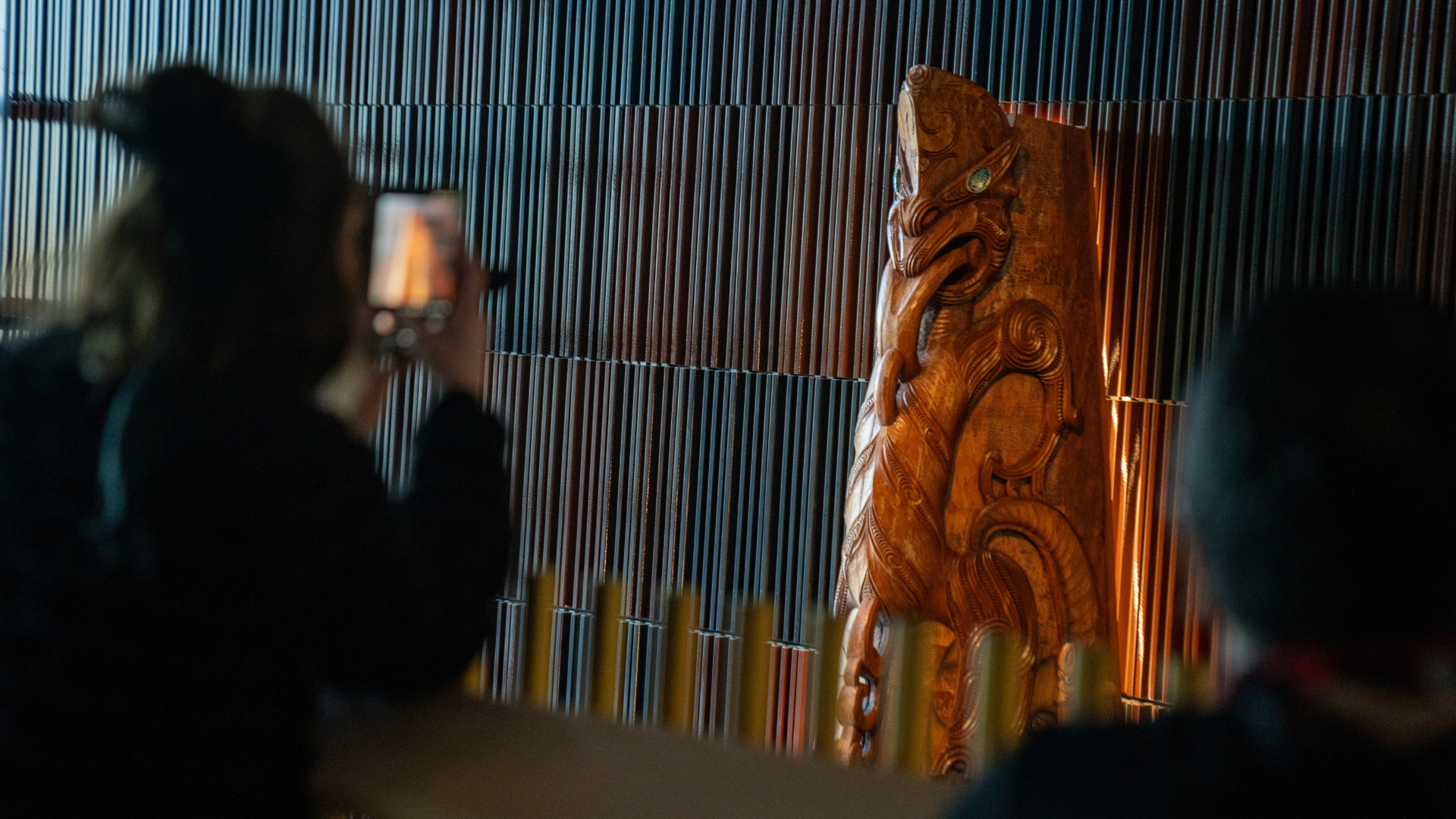
That feeling begins the moment you approach NZICC from the street. As you look up, you’ll see that the spine of the building is encased in 13,500 ceramic tiles created by Tāmaki Makaurau based artist Peata Larkin. Peata’s artwork ‘Pekerangi’ wraps around to meet the stunning glass panels designed by Sara Hughes, ‘Iwi Rau’. Together they form a korowai (traditional Māori cloak) for the venue, ‘Te Pekerangi o te Iwi Rau’, a unified environment where the rhythms and textures of the forest meet human experience and offering manaakitanga (hospitality and generosity) to all those who enter. And then you step inside.
Te Raukura says, “The first time I came into the building I felt this strong presence. When you arrive to our atrium, you enter into what we at NZICC call, ‘The land of Tāne’. Tāne is the Māori god of the ngahere (forest), and this building has that same feeling of being alive like the forest.”
As you move through the space, you’ll also see the commanding 15-metre-high artwork by one of New Zealand’s most celebrated Māori artists, Shane Cotton (Ngāpuhi, Ngāti Rangi, Ngāti Hine, Te Uri Taniwha), and the magnificent 'Pou Wairua' waka, crafted from native kauri by Tohunga Whakairo (Master Carver) Lyonel Grant (Ngāti Pikiao, Te Arawa).
Māori cultural experiences
While these visual building elements are immediate and immersive, this is just the beginning of the cultural journey at NZICC.
When it comes to the events themselves, there are many more ways to bring Aotearoa culture to life. From the incredible and inspiring pōwhiri – an elaborate opening ceremony that follows the traditional welcome observed on a marae – to mihi whakatau, smaller, less formal opening ceremonies which still uphold tikanga. Then there are rousing cultural performances, engaging keynote speakers from Ngāti Whātua Ōrakei, and, of course, the globally recognised haka, made famous by its appearance on rugby fields around the world.
Tee’s role is not only to facilitate these opportunities for clients but also to provide a sense of cultural safety along the way. “I will speak with clients in the planning stages to give them a clearer understanding of what the protocols are.
With all these Māori words in the mix, it can be a little bit confusing, so I’m there to give clients an understanding of the different cultural activations available and provide guidance around what to expect with each one. I’ll explain the significance of different practices, advise on how to pronounce Māori words and really put everyone at ease. I want people to feel safe about asking any kinds of questions.”
Which practices to choose, and when, is something Tee guides clients on so they can feel assured they are being respectful but doing so in a way that will work with their unique circumstances and timeframes. “One thing I’ve learned from this business is that people are often working with very tight schedules, so we’ll look at how we can implement these practices in places where we’re not taking up too much time, while still uplifting the event as a whole.
“Whatever way people choose to engage, we ask that they come with an open heart, be open to these new experiences, and just know that they are always in a safe space.”
Tee takes us through the pōwhiri process:
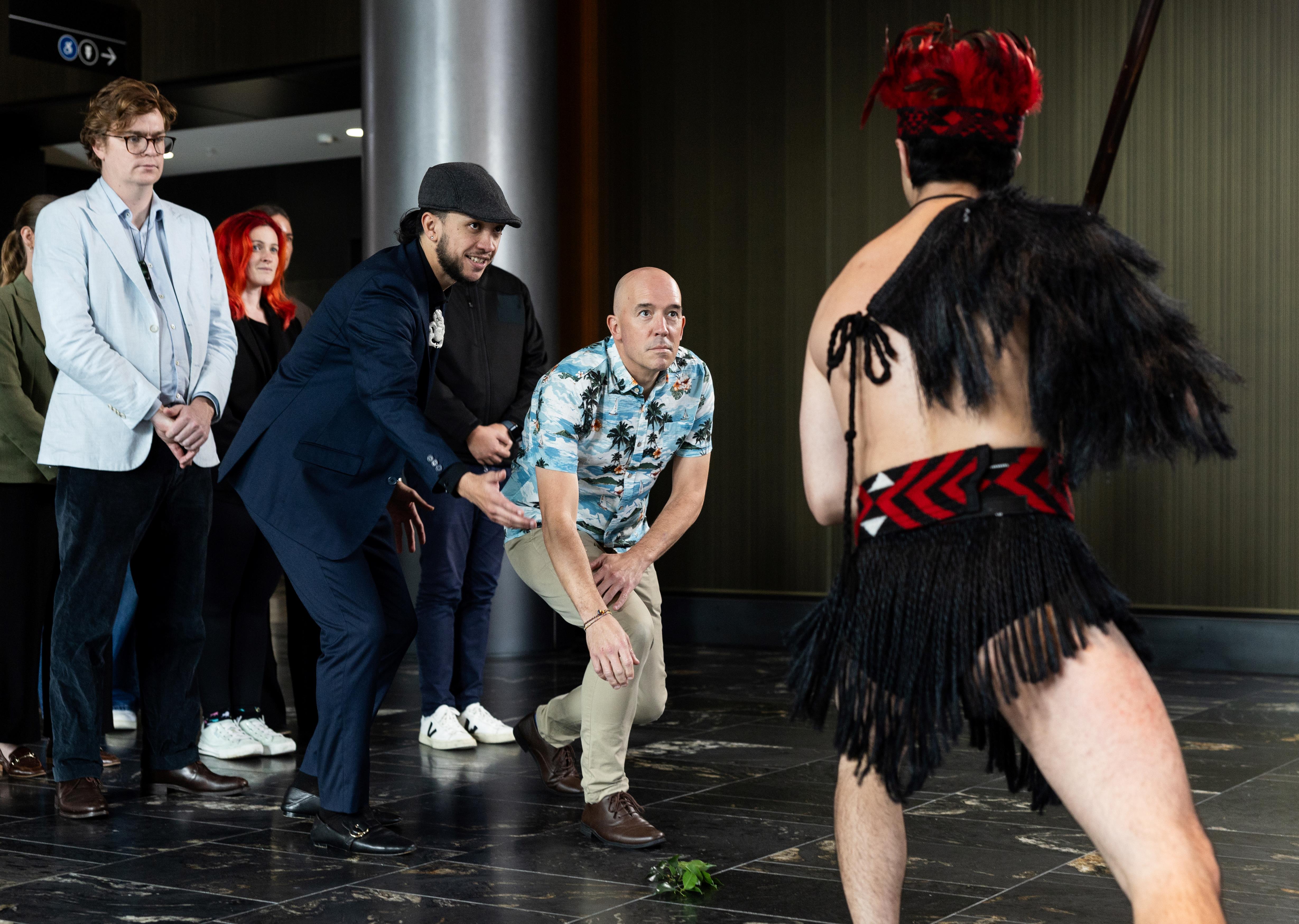
“Every pōwhiri starts with our kaiwero, our challenger, who back in the day made sure that those who were coming onto your land were coming with the right intentions. The warrior is sent out to make sure that the oncoming troop comes with peaceful intentions.
“He comes with taiaha (traditional staff weapon) in hand, and he moves towards the visitors, often with violent gestures, showcasing his prowess with this particular weapon. This culminates in the laying of a rau, our token of peace. This token is picked up by visitors to show that their intentions are peaceful.
“It’s fair to say that this part can be a bit confronting for visitors, but it’s reflective of that original process of learning if people were coming in peace or for war. We’ve held on to those historical protocols and practices, and we try to keep them alive in the same way today.
“It’s also important for clients to know that during the pōwhiri process, I will be on their side, as their right-hand man. I’ll be there guiding them, letting them know where to go and what to do at all times. My job is to bring that sense of calm.
“Following that comes our kaikaranga, our female ceremonial caller, who acts as the first voice heard on the marae. It’s a high pitched, melodic tone used with eloquent language to bridge the physical and spiritual worlds, paying tribute to the dead, honouring the living, and setting the tone for the gathering.
“The women have the most important role on the marae. People often ask why they are traditionally seated at the back and this is because in our [Ngāti Whātua Orākei] Māori culture, women are seen as the bringers of life. The tradition of having our men sitting at the front harks back to the years where a troop would come for war, so we’re creating what we call a shield wall.
“From the karanga, we go into the haka pōwhiri, which is a powerful Māori ritual or chant performed by our hosts to welcome visitors into the space. This injects meaning and purpose into the event and sets the intention for what follows. Haka is probably the practice most synonymous with Māori culture outside of New Zealand. People will often have a general understanding of it already, and in this case, it will be both our males and females performing this tradition.
“Then comes some oratory or whaikōrero. Our local people will provide a speaker to welcome newcomers into the building. Once our speaker finishes, we’ll pass the talking stick over to the other side, to our clients. For international guests, we invite them to speak in their own language so that it feels like a true connection of cultures.
“The ceremony then concludes with a hongi, that’s the pressing of the noses, which symbolises the coming together of two parties, making them one. Many of our clients have some awareness of this process, but I take them through the whole process prior to the event.
“After that, the formal part of the ceremony is complete, and we move through to the next space to share kai (food) together. This brings us together as whānau (family).”
For more information on the cultural experiences for your event, head to our Cultural Connections page.
Cultural Connections